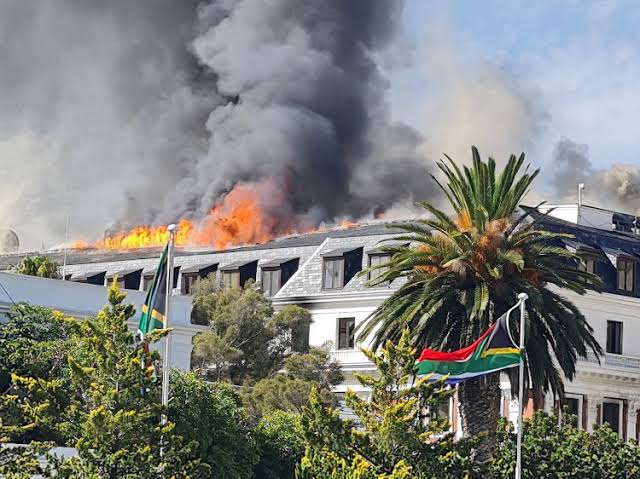
As the time for the annual State of the Nation address inching closer, the South African population is itching for visionary leadership with practical interventions to restore its dignity and the pride of the diminishing state on the facade of a costly world-acclaimed Constitution.
Thursday | February 10, 2022
South Africa/SA – If ever there was a difficult speech to deliver for President Cyril Matamela Ramaphosa in his tenure to date, certainly, this 2022 one on Feb. 10 comes pretty close.
Ramaphosa will perform the annual ritualistic State of the Nation Address (SONA) at City Hall in Cape Town on Thursday evening. There is a difference though to the usual theatrics this year. This is so due to changes in the venue occasioned by parts of Parliament torched by, from the reports, a vagrant, Zandile Christmas Mafe (49), an alleged arsonist last month. The ravaging fires also affected the National Assembly where the speech is usually carried out by the incumbent.
Even so, there is a bit of convergence as regards the annals of history. City Hall is famous for the Feb. 11, 1990 address to the nation by the former 1st democratic President of SA Nelson Mandela upon his release after 27 years in prison. Ramaphosa is the man who held the microphone for Mandela as he addressed the massive gathering. And today he makes a return; this time as the one who will be on the podium with the entire country watching him layout the impossible master plan out of the crises SA is in.
President Ramaphosa’s speech comes at a critical time in South African history and its socio-economic crisis under the umbrella of the governing National African Congress hegemony. There are a myriad of challenges confronting the leadership of the country. This article touches on the critical ones but they do not exhaust the SA’s cocktail of problems.
Firstly, the past two years have been devastating for South Africans due to Covid-19 outbreak early in 2020. Quite obviously, the pandemic has had more or less the same effect in many parts of the world, safe to say some countries have been shielded by their strong economies. Not so for emerging and underdeveloped states.
However, in SA the impact of Coronavirus led to the closure of many sectors. As a result of that, new regulations had to be promulgated to deal with the widespread scourge of the new virus and bring some sectors back to operation, albeit tentatively. The President also declared the State of Disaster which is still in effect to this day. Among the issues he has been urged to address and is expected to bring it to an end. This is motivated by the current state of affairs in the country which has resulted in high increases in social instability such as social unrests accompanied by vandalism.
Secondly, when Covid-19 struck, the economy was in recession and it sank even deeper, setting the fertile ground for more social problems in the country. The contagion caused more job and house losses, high unemployment and prices. The cost of living is unbearable for millions of citizens in the country.
Thirdly, SA is the 2nd biggest economy in Africa and consequently, it attracts many economic migrants due from a cross the border and far. The country has witnessed new political parties formed along the lines of protecting local jobs and economic opportunities in the domestic frontier. It would have been a colossal chance missed should the President of the Republic not realign the country’s foreign policy in favour of the locals and their valid aspirations.
Finally and connected to the above, it is the recurring electric power shortages that continue to assail the state utility company, Eskom. It is a huge concern that affects the entire country directly. Year in, year out speeches and promises are made but no lasting resolve ever comes off them. Without misgivings, this is one of Ramaphosa’s bugbear and he needs to get off his back.
A hot issue at hand that is unequivocally clear is that solutions to stop the socio-economic regression, growth and sustainability are required as a matter of urgency.
Although the government has tried a few tried and tested interventions but they have proved insufficient and were not going to be in a tanking economy. Now there are speculations on retaining the R350 social relief of distress grants provided by the state to cushion the downtrodden masses. Retention is one thing but there are debates about increasing it somehow to improve its benefits. Economists are divided as to how this Covid-19-inspired policy, if it becomes a permanent ritual, how it will be funded?
If the government hikes taxes, who will feel the mighty sting between employees and companies? Broadly, what can the citizens expect from the Ramaphosa tonight?
To deal with mismanagement in government and corruption, it is expected that the president should dwell more on practical solutions than the usual protracted commissions of enquiry and consultations which never bear fruit.
For much of the problems in the state are well-known yet implementation has been a stick barrier which is not clear nor any attempt to do anything. As political analysts will put it, the rot in government continues. It has been there while he was the country’s Deputy President and now current commander-in-chief, they assert. Obviously, not much has changed.
Political will and capacity to arrest the slide and turn around things in the state are glaring indicators. Will the president cease from “smart cities” loaded talk while current towns are falling apart and focus on the nuts and bolts of rebooting service delivery? Or will he stay in his runaway train to Utopia and rehash the old and hackneyed speeches?
President Cyril Ramaphosa will deliver his 5th national address since his maiden one in 2018 and expectations have never been this high. South Africans will be counting on him to give them even the faintest of hope tonight. And he should not let them down.
The business sector too will be anticipating a more relaxed and reassuring road map for the year with few bumpy surprises from the government. A more supportive and infrastructural spend to revitalize the decline in the economy.
On a positive note, Statistics South Africa has conducted a census this year since 2011. This critical department of the state could do so last year when it was supposed to as rla result of Covid-19 uncertainty. Nevertheless, the socio-cultural and economic data gathered by this machinery will be, as it has always been, valuable to paint a clearer picture of where the country stands on different strata of society.
On the other hand, the beyond the borders optics are somewhat encouraging. Countries worldwide seem to be embracing the harsh reality that the global populace will have to make do and dance along with the scathing swings and misses of Covid-19.
The deafening cries have never been loudest from every corner of the country to regenerate economic activities that will benefit the taxpayers and citizens at large. As the clamour echoes around the annual national address, in particular, Ramaphosa will right his legacy.