Updated April 21, 2020 | 19:20
With no end in sight, the incline on the number of Covid-19 infections in South Africa is continuing its upward trajectory unperturbed.
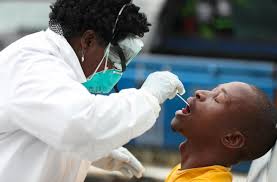
The Department of Health (DoH) confirmed 165 new cases today taking the total from 3, 300 to 3, 465 with 126, 937 tests conducted so far.
As of yesterday, deaths had gone up from 54 to 58 accompanied by DoH announcing recovery improvements of 165 to 1, 055 overall.
Facts-based decisions
At 3, 465 cases and 58 deaths to date and climbing, the level of uncertainty is even more palpable as how the viral disease will behave in the next coming days. Perhaps not so much for the contagious virus as the conduct of the people.
To be precise, the high volume of the trickling results due to the expanded community screening and testing in the past few days will show a clearer picture in a near future. Some argue that the results will tip the scale of whether to wind down the lockdown or step it up.
Currently, SA has entered day 26 of its two-phase 35-day shutdown imposed by the national government. Up to now, the mandatory restrictions – the travel bans, provision of essential services at most, stay home orders, good hygiene and self-quarantine pleas – have worked to a larger extent.
Nevertheless, there is a ground swell that the state must start lifting some of these measures and put people back to work.
Of course, easing stringent controls should be guided by indomitable facts, principle and discipline geared towards observing safe interactions and avoid spoiling the good strides already made. Moreso to guard against rekindling Ramaphosa’s “complacency” caveat when he announced the two more weeks of the lockdown.
The “calm before the storm”
Experts forecasts indicate that the highest peak may happen post-winter. A peak is the highest point of recorded cases before the infection rate levels off and starts to decline.
Compounding all this, as Dr. Zweli Mkhize, the Minister of Health, previously said is the fine line between common cold and influenza (usually brought to bear by the winter season beginning May) with similar symptoms to those associated with coronavirus. This is a major concern.
The late internationally renowned physician and researcher, Brian S. Decker, once explained out cold and flu beautifully:
“A cold usually comes on slowly, starting with a runny or stuffy nose, sneezing, and a sore throat. The flu often comes on quickly with extreme tiredness, fever, body aches, and a cough. Both usually last for 1 to 2 weeks.”
In the contrary, National Institute for Communicable Diseases described the SARS-CoV-2 ones as:
“Symptoms of COVID19 include fever, coughing, and shortness of breath. In more severe cases, infection can cause pneumonia or breathing difficulty. More rarely, the disease can be fatal.These symptoms are similar to the flu (influenza) or the common cold, which are a lot more common than Covid-19.”
The resemblance of cold, flu and Covid-19 is too hard to ignore. This is what has Dr Mkhize and the entire SA government worried. Everybody should be.
The drag in the increase of Covid-19 cases, the Minister cautioned, may be an impending “calm before the storm”.
In this regard, the relaxation of control measures should be measured. If it happens, it must be intertwined with thorough preparations to ensure the resumption of economic activities and the availability of plausible health facilities are well-aligned.
The feeling on the ground is that the government has had sizable time to gather the medical supplies required for the SA health system to hold its own when the floodgates loosen. Although conventional wisdom holds that there can never be enough time to prepare for an unprecedented crisis.
The slow upswing of infections has allowed hospitals a breathing space in the intake of would-be coronavirus patients though. For its worth, bucking the trend of overwhelming hospitalization numbers seen in Asia, Europe and the Americas.
Judging by this dreadful global yardstick, calamy has been kept at bay to this point.
The question is, how will SA phase-in economic activities without exposing citizens in harm’s way?
Economy return looms large
Better still, pent-up frustration and unyielding anticipation to return to normal life have never risen so high. There is profound pressure in the Republic for the reopening. A deep sense that next week, end of April, President Cyril Ramaphosa should at least undo some of these suffocating rules although necessary.
That difficult decision from the Union Buildings is expected with bated breath before the 30th of April. Until then, South Africans and everybody else, should heed the safer distance call, hoping for Covid-19 numbers to plateau as winter begins to chill the atmosphere.