In her work of art, “Groping In The Dark”, Honoria Groves writes:
“Some people are still groping in the dark, Stumbling along all alone, Refusing the hands stretched out to help. Ignoring the lamp offered to them.”
If you had asked anyone a few months ago about the general public wearing masks when they venture out of their homes, you would have most certainly received strange responses and stares.
The global outbreak of the coronavirus pandemic has flipped all that on its head. The Covid-19’s grip on people’s ordinary lives is profound and unprecedented.
Those would-be strange responses and stares have been shaken to their bases and overtaken by events.
Currently, masks are the most sought-after pieces of health and protective equipment in the entire world. The flip side is that they are in short supply, rare and expensive. Countries across the world are queueing, scrambling and outbidding each other to the draw for these health jewels.
Compounding this brutal rat race for surgical masks is the lack of global nor coordinated response to deal with Covid-19 notwithstanding its universal impact. It is every country looking out for its own, bar a hand by the Cubas here and a stretcher by the Germans there, intermittent by Chinese generosity.
The World Health Organization (WHO) has egged on countries to pull resources and work together for “no country is immune” to coronavirus.
At this point, masks are largely needed in hospitals or healthcare facilities around the world. Owing to their deep pockets, first-world countries are the first in line with blank cheques while developing countries feed on crumbs, if ever.
Luckily, most of the third-world and/or emerging economies are yet to see unbridled sharp peaks in cases and deaths experienced in Europe and the United States. Ecuador might be an exception.
Masks are a crucial element of equipment at this runaway viral infection period. True to form, it is a norm to see medics clad in one when they go about attending patients and executing their healthcare services.
Not only are masks sought by medical practitioners and suppliers from all corners of the world at the moment, they have become prized must-have possessions. Every country needs them, even the so-called reluctant states.
The mask debate
A philosophical debate is in full steam in the United States (US) about “who should wear a mask?”
There is a section of the community that says wearing masks will make Americans appear sickly in the eyes of the world. A complete contrast from a proud nation and a global superpower.
Then there are medical optics who advance evidence-based insights. Their professional approach is based not so much on a person being infected but, on an asymptomatic person protecting those he or she may come into contact with.
It is understood that there are Covid-19-positive people who may be walking around carrying the virus meanwhile not showing known or any notable symptoms. These people are deemed asymptomatic. For this reason, they might inadvertently be infecting others.
Logically, medics advise that everyone should wear a mask and behave as if infected. This argument postulates that we are all potential carriers. The benefit of a mask also is that it reduces the amount of viral droplets from a coronavirus carrier or patient.
“When a person, who was infected with the virus, coughs, sneezes, breathes vigorously, or speaks loudly, the virus will be excreted from the body and may dissolve with the aerosol…” – Juan Wang and Guoqiang Du
The invisible enemy
French President Emmanuel Macron dubbed the current respiratory strain of human-to-human transmission of the Covid-19 pandemic an “invisible enemy”.
Coronavirus “is an effectictive killer”, remarked Andrew Cuomo, New York (NY, America) Governor. In a rather intriguing turn, his President, Donald Trump, said he will not wear a mask.
In South Africa (SA), the Minister of Health, DR. Zweli Mkhize advised every citizen to put on a “face cloth mask” to slow the spread of the devastating pandemic. Speaking after the two-week extension of the lockdown by SA President Cyril Ramaphosa, he said medical and/or surgical (N95 Respiratory) masks must be reserved for the health practitioners.
The eerie shortage of medical supplies to deal with the outbreak of the novel coronavirus (SARS-CoV-2) is at crisis point. The BBC (British Broadcasting Corporation) reported Saturday April 11 that doctors in the United Kingdom raised alarms around the shortage of Personal Protective Equipment (including masks). Raising the red alerts by citing some of their colleagues who have become infected and others coming up short in the fatal end of their lives.
There are many recommendations to help cope with these widespread shortages. Other companies in India deviated from the general production of clothes to masks. Some people across the globe are pulling out their knitting machines, dusting them off to stitch up usable masks.
A common craze to find novel means are proliferating to put together these valuable pieces in the era of scarcity.
In an article CNBC published April 2, Noah Higgins-Dunn and Kevin Breuninger quoted New York City (NYC) Mayor Bill de Blasio saying:
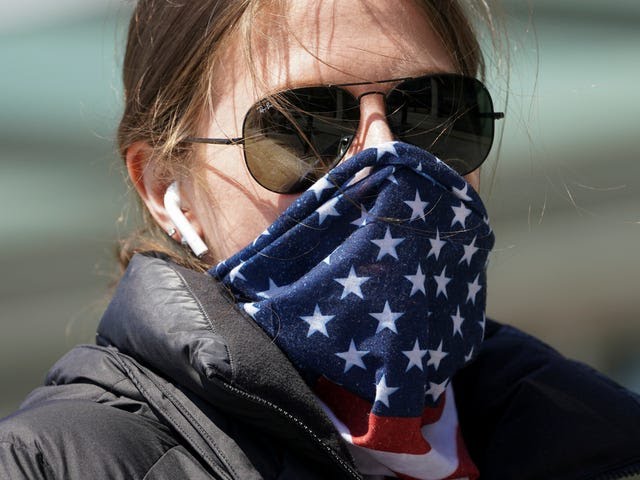
“We’re advising New Yorkers to wear a face covering when you go outside and near other people. It can be a scarf, it can be something you create at home it can be a bandana.”
The case for masks or bandanas
Bandanas have been mooted in the Americas as alternatives to surgical masks. Dr Mkhize said handkerchiefs can also be useful to limit the spread provided they are handled well together with practicing healthy hygiene.
The urgency of bandanas, cloths or handkerchiefs to be used instead of masks is curious. MEC for Health in Gauteng, Dr Bandile Masuku recently raised the issue of medics experiencing a shortage for surgical masks in SA while ordinary citizens access and utilize them with relative eas.
Again, a mask or a bandana does not prevent a person from contracting Covid-19, commented Dr. Sanjay Gupta, CNN medical correspondent. People still have to practice clean hygiene and social or physical distancing.
Covid-19 spreads when an infected person coughs or sneezes and the droplets land in nearby surfaces or spatter on other people. Another person can contract the disease after touching contaminated surfaces with the virus, inhaling it or coming into contact with an infected person.
Research also shows that aerosols, the tiny drops emitted when a person is speaking, breathing, coughing or sneezing, remain dispersed in the air for some time.
On April 3, 2020, Africa Check posted that “Aerosols are any kind of particles suspended in the air.”
The Irish Journal of Medical Science published an article by Juan Wang and Guoqiang Du who cited the National Health Commission of the People’s Republic of China “guidelines for the diagnosis and treatment of COVID-19 infection” on April 18 stating that:
“With the awareness and understanding of the disease, the guidelines show that the droplets and close contact transmission are the main routes of transmission, and aerosol transmission is possible under the condition of long exposure to high concentrations of aerosols in a relatively closed environment.”
It is now medically accepted that the novel coronavirus disease is airborne.
Writing for Sky News on Covid-19 aerosols, David Mercer on April 10 cited a Finland study that found:
“Extremely small particles of this size do not sink on the floor, but instead, move along in the air currents or remain floating in the same place.”
All evidence points to the heightened risk of not putting on a mask when in public. It goes without saying that being out and about, especially in concentrated spaces according to research, exposes people to catching the monstrous virus.
Heeding the WHO health guidelines, countries are fast adopting protective face cloth masks as one among an assortment of ways to curb the coronavirus spread.
Global death toll
As debates rage on in different sectors and parts of the world, the Center for Diseases Control and Prevention in the US urges all citizens to wear a mask or cloth mask when going out of their homes. The same message has been published and is being promoted in South Africa by the Department of Health and its officials.
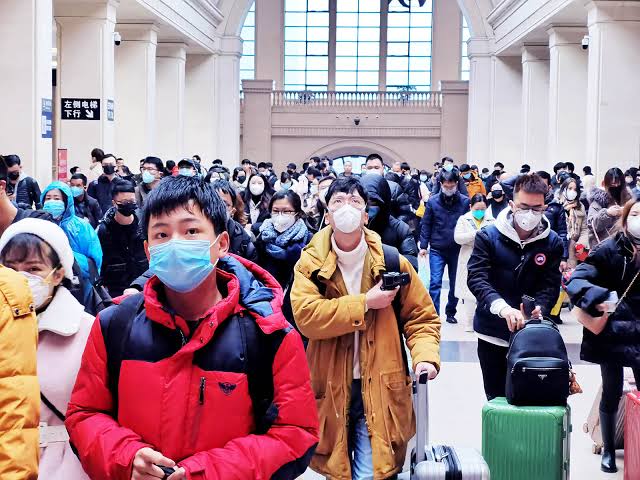
Meanwhile on Wednesday April 8, China lifted the lockdown restrictions in Wuhang, the area alleged to have reported the first case/s for Covid-19. Notably, the Chinese citizens came out in droves spotting masks across the area after enduring two months-and-half indoors.
From now on, it is clear that masks will become a normal wardrobe material for the foreseeable future. The transmission of coronavirus can be minimized rapidly through radical changes in the way people behave and interact with their surroundings. That is where the unrelenting challenge is.
According to Johns Hopkins University, Covid-19 has killed 113, 672 in 185 countries or regions. The US remains the epicenter for the pandemic with over 21, 000 lives lost. South Africa has reported 25 deaths and 2, 173 cases so far.