As the obliterating coronavirus sweeps the world by a devastating storm, citizens are enduring a prolonged depressing wave last visited on earth in 1918. It is recorded in the anals of history that the terminal “Spanish flu pandemic” over a century ago claimed “at least 50 million” innocent lives worldwide, the Center for Disease Control and Prevention (CDC) recounts. Here are the people of the world again being savagely pounded by its merciless cousin with a nuanced morbidity. In a historic move to be narrated to and read by generations to come, South Africa is gearing up for the extended stay-at-home government order until the last day of this calendar month (April 2020).
The 21-day lockdown South Africa imposed on the populace has been topped-up by 14 more days to delay, contain and limit the spread of Covid-19.
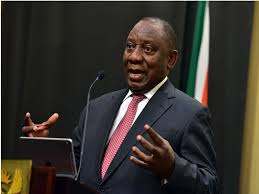
While the majority of people grapple with basic food and sanitary supplies and others anxiously contend with uncertainty about their jobs and companies trying to stay afloat, Ramaphosa carries the enormous national burden of minimizing the social impact without further collapsing the economy to irredeemable levels.
Addressing the nation from the seat of government at the Union Buildings in Pretoria, he urged South Africans to endure an additional 2-week bump on top of the 21 days which begun March 27.
Covid-19 rising trajectory
The upward trend in SA for coronavirus cases has not lessened, albeit the slowing down in the rate of increase. The Minister of Health, Dr. Zweli Mkhize cautioned about this which may be the “calm before the storm”.
He was basing it on the coming winter (in May) usually associated with influenza. For this reason, people should, he advised, be vaccinated because the lines between the coronavirus disease and influenza will be blurred.
Parties consulted
Before the official announcement, the President met all the (9) Provincial Premiers and political parties represented in the South African Parliament. United Democratic leader Bantu Holomisa confirmed on Newzroom Africa that they spoke with Ramaphosa in the intervening afternoon.
It is in Ramaphosa’s demeanor to take on board those on board not only his party comrades but those in the opposite benches.
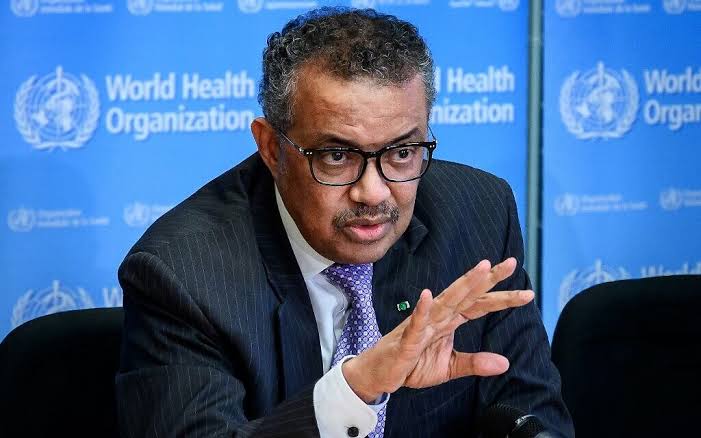
A leadership philosophy exposed by the WHO Director-General, Dr. Tedros Adhanom Ghebreyesus. He alerted world leaders recently that “Please don’t politicise the virus!” for Covid-19 is a “common enemy”.
Distancing still key
The President continued to empathetically to encourage citizens to rally behind the national effort against relaxing the shutdown rules for it may “reverse all the gains” made in two weeks.
Stately, people must stay at their residences, avoid unnecessary travels and practice social or physical distancing along with better hygiene.
For its part, working with different stakeholders, government will methodically continue to roll-out controls to mitigate and curb the adverse effects caused by and the potential contagion of the coronavirus pandemic.
Cabinet salary cuts
In a bold yet appropriate move seldom experienced in domestic politics, he said his cabinet (Deputy President, Ministers and Deputy Ministers), as well as Premiers will forgo one-third (33%) of their salaries for a period of three months. A symbolic masterstroke not common particularly in South Africa since the birth of democracy 26 years ago.
The three-month salary cuts will cumulatively go to the Solidarity Fund set up to soften the blow to those afflicted the worst by the Covid-19 plague.
In his profound words, President Cyril Ramaphosa said last night that:
“I am pleased to report that the Solidarity Fund – which was established to mobilise resources from companies, organisations and individuals to combat the coronavirus pandemic – has so far raised around R2.2 billion. It has already allocated around R1 billion to buy sterile gloves, face shields, surgical masks, test kits and ventilators.”
Furthermore, with the magnanimous gesture to ease the stinging pangs to the most afflicted, he coaxed his colleagues in the public sector and the private sector to echo. He deplored the business community that:
“In this respect, I would like to appeal to all large businesses not to resort to force majeure and stop paying their suppliers and rental commitments, as such practice has a domino effect on all other businesses dependent on that chain.”
With 1 934 number of confirmed cases on the count by Thursday nightfall, coronavirus had claimed 18 lives in South Africa.
Spanish flu
The silent killer is one of the deadliest strain of viruses in the 21st century. However, 102 years ago the world suffered the worst in what is widely known as the “Spanish flu pandemic”.
According to the CDC, a brunch of Department of Health and Human Services in the United States of America (USA) posted that:
“The 1918 influenza pandemic was the most severe pandemic in recent history. It was caused by an H1N1 virus with genes of avian origin. Although there is not universal consensus regarding where the virus originated, it spread worldwide during 1918-1919. In the United States, it was first identified in military personnel in spring 1918. It is estimated that about 500 million people or one-third of the world’s population became infected with this virus. The number of deaths was estimated to be at least 50 million worldwide with about 675,000 occurring in the United States.”
South Africa was not spared the catastrophic wrath of the 1918-1919 awful epidemic.
In The Conversation, Howard Phillips, Emeritus Professor of History at the University of Cape Town, recounted that:
“South Africa was one of the five worst-hit parts of the world. About 300,000 South Africans died within six weeks. That represented 6% of the entire population.”
At the moment, over 1, 6 million Covid-19 cases and 95 000 deaths in “185 countries/regions” of the world have been recorded, Johns Hopkins University & Medicine published.