High unemployment threat to national stability
MagRush writer | August 12, 2019
Aloofness does not feature in issues of national interest. Scarcity of jobs in South Africa (SA) is rising. The increasing unemployment statistics must concern us all. Spare a thought for job seekers who have to scrape through without any source of income, not knowing where their next meal will come from. These are typical elements of obliterated ambitions which eventually rob people of their dignity and dreams. For some, looking for a job is tantamount to chasing shadows with little promise, if nervy reflections on the horizon. The reality is that the high number of economically inactive people in the country is on a demoralizing peak.
All matters considered, jobless people, like everybody else, need food for self-sustenance. They also need to cloth themselves and support others. It is what most people regard as “basics”, often taken for granted. If no serious economic interventions to stimulate the economy are launched by the economic architects in this country, everyone earning an income will be forced to subsidize this cohort. Either directly, through income tax or by virtue of family ties or indirectly, via other forms of (hefty) taxation by the state. “Collecting more taxes than is absolutely necessary is legalized robbery,” this sentiment by Calvin Coolidge, former US President (1923 to 1930) is all too familiar.
Shedding burden
Money is a tricky medium. At a personal level it pricks emotions. Advocates of tax are few and far between. Tax savvy individuals and companies hate seeing their profits eroded by this obligatory payment. They organise their incomes in such way that they are liable to pay less on their taxable incomes. This is what is called tax avoidance in SA which is legal to a degree. It is a by-product of over-taxation. Some get portions of their salaries paid to trusts to escape a deep cut of their incomes by the taxman.
On the other hand, people disguise or doctor their earnings to minimize the tax bills. This amounts to tax evasion which, in turn, is illegal. It may emanate from undeclared sources of income or fictitious expenses designed to pay less tax, says Johan Stuart, Tax Manager at Tax & Legal. It often results in financial outflows which would have been paid to the authorities; where high amounts are involved, money may end up in tax havens and offshore accounts.
In a nutshell, society’s income earnings compensate for the destitute.
The Statistician-General and Head of Statistics South Africa (Stats SA), Risenga Maluleke announced a staggering unemployment rate of 29% recently. This shocking rate came at the back of the first and second quarters (Q1 & Q2) collated labour numbers. A high last witnessed in 2008 when economic recession was in full throttle, even the West caught the jitters.
Banks and companies went belly-up in America during this epic economic meltdown. Lehman Brothers, Washington Mutual among others filed for bankruptcy. Indymac Bank went bust. Some companies were financially rescued by the US Federal Government (The Fed.). Merrill Lynch sold to Bank of America, Fannie Mae and Freddie Mac; General Motors, Bear Stearns (acquired by JPMorgan), American International Group (IAG) were all bailed out by the US government, Steve Schaefer posted in 2011 on Forbes.
In 2008, Reuters reported that the UK government “nationalised” Northern Rock through a “25 billion pounds” loan from Bank of England to jump-start “Britain’s fifth-largest mortgage lender” to avoid runaway risk in the financial markets. Writing for Committee for the Abolition of Illegal Debt (CADTM), two years ago, Eric Toussaint took a swipe at analysts who highly concentrated blame of the credit crunch bubble of 2007-2008 on “irrational behaviour of poor Americans … .” The bottom line is, governments intervene when too-big-to-fail organisations face an uphill battle and the only way out for these firms is to fold.
Can the SA government afford to subsidize these firms which are or about to retrench? Lest facts dissipate, State Owned Enterprises (SOEs) like Eskom, South African Airways (SAA), Denel, South African Broadcasting Corporation (SABC), often run to the government with begging bowls when under financial distress.
Government debt was alarmingly 55.80% of the Gross Domestic Product (GDP) the previous year, 2018. Debt, as expressed in percentage terms here, determines the country’s ability to pay. With an economic growth rate revised every so often, currently at a depressing 0.6%, there is not much inspiration left. Even by the more objective global financier, the International Monetary Fund (IMF), estimates of a potential growth forecast of 1.9% next year, 2020. It is a precariously insignificant climb given the profound economic woes swarming the country. By all estimates, including the unachievable earlier “1.5%” economic growth projection by the treasury, show things are likely to get worse before they get better.
The latest published numbers paint a grim picture in SA for new job seekers in the marketplace. Yet what chance is there for employees laid out of work by mechanisation or automation and other global phenomena or the changes associated with the much-talked about 4th Industrial revolution.
Pangs of unemployment dwarfs developmental state
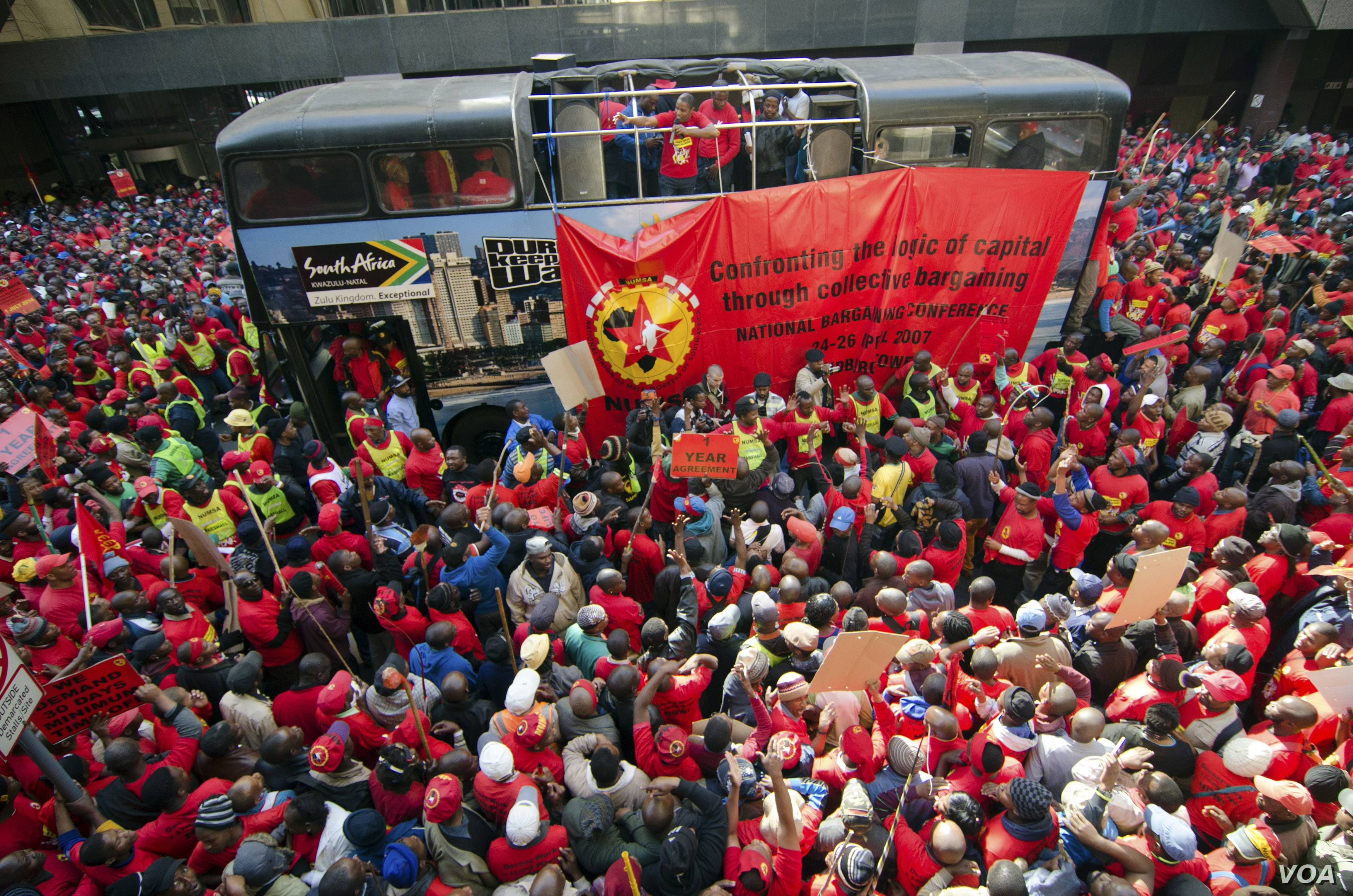
The scourge of joblessness afflicts the indigent, the youth and those living in the outskirts of the cities where opportunities are limited. What does it mean? Social instability like civil unrests, the prevalence of crime, health hazards, et cetera, will spread.
For the downtrodden, the forgotten and the economically inactive, famine and poverty might also multiply. Thus, government expenditure will be diverted to social welfare than economic development and prosperity. The country’s path to compete globally will become murky and opportunities are bound to diminish.
Epoch of unpredictability
A dogged drive to activate the vehicles of economic growth are sounding ever louder. A clarion call to shift the investment gears swiftly for the real work to begin; accelerate where there is potential.
However, high investment the economy desperately needs right now is dependent on favourable policies, demand, high interest rate and other variables. This confluence of factors does not birth new firms nor spur expansions on a flick. They are subject to the government of the day and external or global dynamics.
After all, companies are not in business to tussle and stem out unemployment. They have their own troubles. Job creation and preservation may not be on their priorities of to-do-lists. They’re profit-driven.
Potential investments are also affected by the ever technology in different industries. This is compounded by barren and/or obsolete infrastructure which may be non-existent in other areas. Lack of skills and advanced knowledge to function in what world-renowned Paul Krugman, Distinguished Professor of Economics at the Graduate Center – City University of New York (CUNY), calls the “gig economy” affects the labour force adversely.
Fundamentally, the unemployment rate (in SA) is further undermined by other socio-economic factors such as employability and the structure of the economy – a mismatch between skills needed by companies and what people possess.
Seemingly, it is not all doom and gloom in the economic front upon scrutinizing the latest figures from Stats SA. David Francis and Imraan Valodia wrote on Daily Maverick that the (29%) rise (from 26.7%) in unemployment rate emanates from a need by a number of people entering the job market, “not by a fall in the actual number of workers employed”.
For this reason, the latest unemployment numbers are not a sign that jobs are being lost. Even so, jobs shed are offset by jobs created in the last few months and, job loses differ from industry to industry; so is the (industries’) vulnerability. The crux of the matter is there are more people who may have fallen on hard times and suddenly feel a surge in the belly for job-hunting. Therefore, life is unbearable for millions of hopeless souls out there in the lonely and dusty streets of our habitat.
On that ground, there is an urgent need to crank the economic engines up in a bid to churn out jobs. “The fact that more than 9.6 million people in South Africa do not have work is the most pressing problem that our society has to deal with,” Francis and Valodia emphasised.
The question is: A resounding how?
Recalibrating economic levers
Expanding the economy needs a growing GDP which measures annual increases in total production – a subject of growing consumption which requires money. Stimulating consumption is lured by available or accessible purchasing power. Lowering interest rates can aid increase demand, spawning party time for customers. However, lower rates do not encourage investment. Economic think-tanks contend upping interest rates will encourage investment –a policy ideology at odds with demand on inflationary grounds. In it, lays a risk of spooking away consumption. These two polarized extremes above create an economic dichotomy.
It is widely known the business sector cannot create jobs commensurate with the country’ population growth. It does not happen! The government, on the contrary, can embark on a massive expenditure drive. That means wasteful expenditure must be avoided or weeded out. But how much can government collect under the current downbeat economic activities?
Austerity measures – the so-called “investment boycott” – by the super-rich and well-to-do shareholders in companies always have their noses elsewhere. They are a hard sell. With its financial and borrowing muscle, government can weight in. Its political principals will be the first to submit that the state is already doing so. Pessimists are quick to dismiss these assertions by saying there is no alignment with and among key sectors of the economy. More can be done, neutrals point out. The politics of it all often muddy the discourse. However, is government expenditure (or fiscal policy) as it stands enough to reboot the economy and tickle the markets though?
Outsourcing or subcontracting sponsored by government creates work temporarily, especially for the blue-collar type. Government’s pursuit of its well-favoured public expansion programmes meant to take up more labourers remains intact. That said, the sweeping corruption in what President Cyril Ramaphosa succinctly labeled “9 wasted years” sought to slowdown, divert and derail all these efforts by government.
Last year (2018), registering its ire, the South African Federation of Trades Union (SAFTU) General Secretary, Zwelinzima Vavi downplayed president Ramaphosa’s “Economic Stimulus and Recovery Plan” to wrettle down the challenge of unemployment. Vavi decried it as a failed policy that created economic calamity the country faces. The then Minister of Finance Nhlanhla Nene on a rebound on the same position after being fired unceremoniously by former President Jacob Zuma in 2015, December 09 – a controversial decision that saw the rand crash and markets shake – spoke of the “stimulus package” to fund this grand plan for economic growth and job creation of which funds were going to be retrieved from “under-performing departments”.
The departments’s poor performances characterised much of Zuma’s largely divisive tenure which led to him surviving 9 motions of no-confidence votes in parliament. Ramaphosa became the country’s president after the governing African National Congress (ANC) received Zuma’s resignation under pressure in February 2018 nearly a year left of his contentious last term. Ramaphosa had ascended the party’s coveted throne in December 2017 at Nasrec in Johannesburg after defeating Nkosazana Dlamini-Zuma with a narrow margin at the tempestuous ANC national elections conference (the 54th) held every 5 years.
In the run up to the 2019 national general elections, Ramaphosa promised that “2 million jobs” will be created in a 10-year period. That works out to 200, 000 per annum. It is inconsequential in a stagnant economy with 29% unemployment rate.
Nevertheless, the public investment projects tailored to assist start-ups are not showing significant shifts in the jobs space, barking the trend associated with their earned status to set economies on upward trajectories. Perhaps government must ramp-up more “Public Private Partnerships” (PPP) like the Gautrain Rapid Rail Link (Gautrain) consortia. An approach that can be expanded to Eskom battling with energy supply in this country. If it works, why not go the whole hog and realign all suffocating SOEs?
To boot, social welfare is a positive shock-absorber, albeit skeptics red-flagging its sustainability. Already, there are calls for curbing civil servants’ wages by “10%”, a suggestion which labour unions have hastily pulverized. Students’ stimulus or funding has been rising, but not sufficient to set off a tap dance of mouth-watering artistry. To what end also for thousands of graduates teeming the walkways and hallways in search for jobs upon acquiring certificates.
World far ahead
SA’s economic interventions for a developmental state in the 21st century are behind the global competitive curve, even in comparison with other developing countries such as Nigeria, Pakistan, Saud Arabia, Russia, Mexico, Brazil, India, China and so forth.
There is no denying globalisation has shaped economies in ways unforeseen by laggards and/or latent countries. The reconfiguration of the world of work triggered a fundamental shift from production to consumption of products.
Viewed from the bottom, the economic structure must echo these changes in SA. In that alignment, the citizens must not be left languishing in the periphery to their own devices. The inequality divide will be bridged and reduced in the same vein.
If the unemployed are forsaken, general knowledge dictates that it always comes back to the center where the government will be summoned to shield its own citizens. For this reason and inexhaustible many, the unemployment deterioration must be arrested.